Stump Grinding vs Removal: Quick Answer Australia
Stump removal in Australia offers four methods with distinct cost and speed trade-offs. Stump grinding ($150-$500 per stump) is the most popular choice (85% of cases) - fast, minimal disruption, ideal for lawn or paving over. Complete excavation ($300-$800) removes all roots and is required when building over the site or replanting. Chemical treatment ($20-$80) is the cheapest but takes 6-18 months to fully decompose. DIY rental ($150-$350/day) saves money for small stumps but carries real safety and equipment-damage risks for larger or complex jobs.
Typical cost
Stump removal in Australia offers four methods with distinct cost and speed trade-offs. Stump grinding ($150-$500 per stump) is the most popular choice (85% of cases) - fast, minimal disruption, ideal for lawn or paving over. Complete excavation ($300-$800) removes all roots and is required when building over the site or replanting. Chemical treatment ($20-$80) is the cheapest but takes 6-18 months to fully decompose. DIY rental ($150-$350/day) saves money for small stumps but carries real safety and equipment-damage risks for larger or complex jobs.
Best next step
Use the guide below to compare options, avoid common traps and request itemised quotes from licensed local suppliers.
Quote check
Make sure each quote includes materials, labour, access requirements, exclusions, warranty and expected timeline.
Local factors
Final pricing can shift with site access, location, compliance requirements and the condition of existing infrastructure.
Stump Removal Methods Compared: Grinding, Excavation, Chemical Australia
Stump Grinding
Cost:
$150-$500
Time:
30 mins - 2 hours
Best For:
Most situations, lawn restoration, general removal
Ground Disturbance:
Minimal
Most Popular Choice
Complete Removal
Cost:
$300-$800
Time:
2-6 hours
Best For:
Building sites, replanting trees, persistent species
Ground Disturbance:
Significant
Most Thorough Method
Chemical Treatment
Cost:
$20-$80
Time:
6-18 months
Best For:
Rural properties, no time pressure, budget constraints
Ground Disturbance:
None
Most Affordable Option
Stump Grinding Process: Complete Guide, Costs & Timeline Australia
How Stump Grinding Works
The Process:
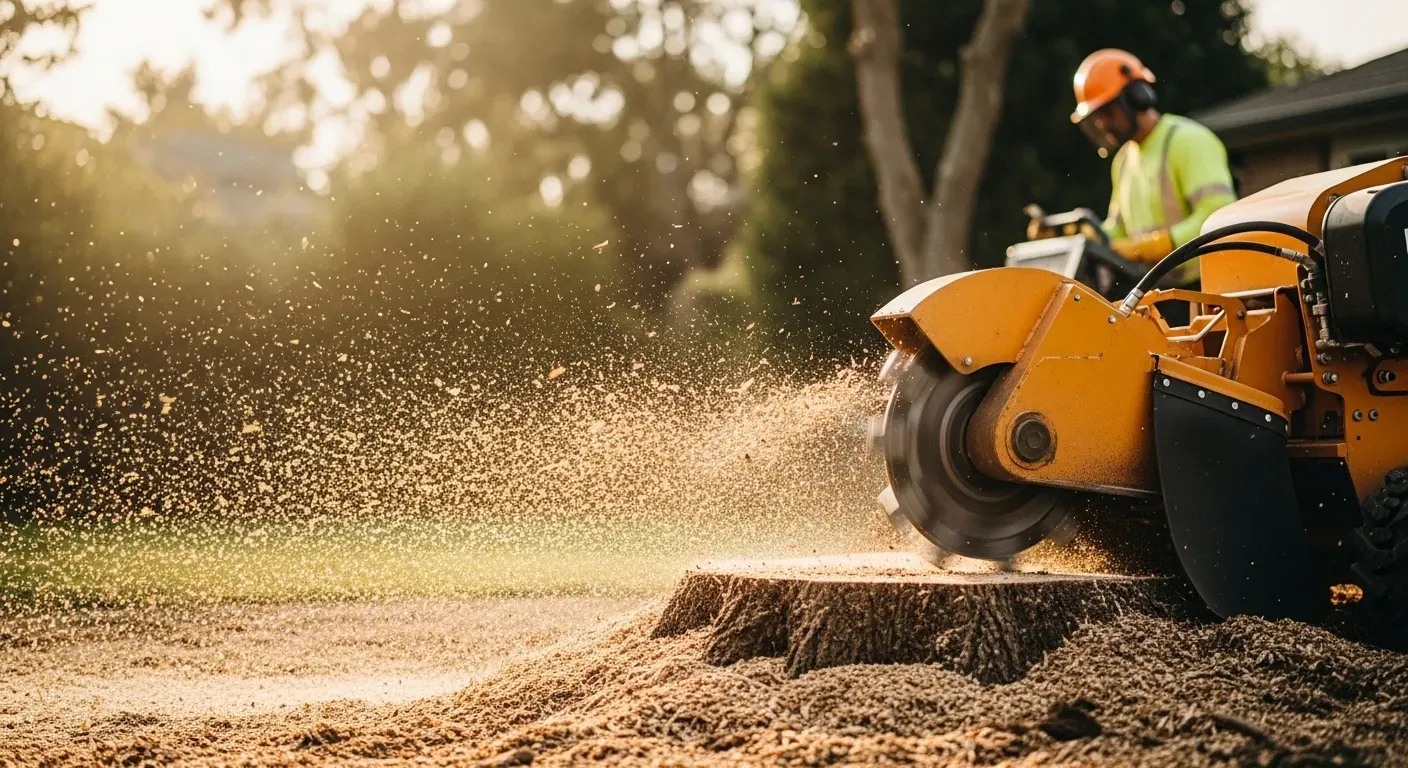
- 1. Grinder positioned over stump with rotating cutting wheel
- 2. Carbide teeth chip away wood in sweeping side-to-side motions
- 3. Stump ground down to 20-30cm below ground level
- 4. Surface roots ground off in 1-2 metre radius
- 5. Wood chips left in hole or removed (your choice)
- 6. Hole filled with soil and turfed if required
What's Left Behind:
- • Main roots remain: 30cm+ below surface continue to decompose
- • Wood chips: 50-200 litres depending on stump size
- • Settlement: Area may sink 5-10cm over 6-12 months
- • Resprouting risk: Low for most species, high for eucalypts/willows
Stump Grinding Costs by Size
Additional Cost Factors:
- • Multiple stumps: 15-25% discount per stump
- • Access issues (narrow gate, stairs): +$50-$150
- • Rock or hard ground: +$100-$300
- • Green waste removal: +$50-$150
- • Deep grinding (over 30cm): +$100-$200
Stump Grinding: Pros and Cons
✓ Advantages
- • Fast completion (30 minutes to 2 hours per stump)
- • Minimal ground disturbance and lawn damage
- • Lower cost than complete removal
- • Wood chips can be used as mulch
- • Suitable for most residential situations
- • Can plant grass or pavers over area
- • Less risk to underground services
✗ Disadvantages
- • Roots remain underground and decay slowly
- • May resprout from roots (eucalypts, liquidambar)
- • Cannot plant new tree in same spot for 2-3 years
- • Ground may settle as roots decompose
- • Not suitable for building foundations over site
- • Noisy operation (ear protection required)
- • Creates dust and flying wood chip debris
Complete Stump Removal (Excavation): When It's Necessary Australia
How Complete Removal Works
The Process:
- 1. Excavate soil around stump exposing root ball
- 2. Dig 1-2 metres deep depending on tree size
- 3. Cut major roots with chainsaw, axe, or root saw
- 4. Use excavator or winch to lever out stump
- 5. Remove stump and major roots from site
- 6. Backfill large hole with soil and compact
Equipment Required:
- • Small stumps (under 40cm): Mattock, shovel, root saw, pry bar
- • Medium stumps (40-70cm): Mini excavator, chainsaw, winch
- • Large stumps (70cm+): Full-size excavator, dump truck for disposal
Complete Removal Costs by Size
Why It Costs More:
- • Excavator hire or operator costs ($150-$200/hour)
- • Disposal fees for stump and soil ($80-$200 per tonne)
- • Backfill soil purchase ($50-$150 per cubic metre)
- • Labour intensive (2-6 hours vs 30 mins grinding)
- • Lawn and garden restoration costs
When Complete Removal Is Necessary
Required Situations:
- • Building foundations: Pool, shed, extension, retaining wall
- • Planting new tree: Same location needs clear space
- • Aggressive species: Liquidambar, camphor laurel, bamboo
- • Diseased stumps: Prevent disease spread to other trees
- • Underground services: Need complete root clearance
Pros vs Cons:
Advantages:
- • Complete root removal
- • No resprouting risk
- • Can build over site immediately
- • Can plant new tree right away
Disadvantages:
- • 2-3x more expensive
- • Significant ground damage
- • Takes much longer
- • May damage nearby plants
- • Risk hitting underground services
Chemical Stump Removal: Timeline, Products & Process Australia
How Chemical Treatment Works
Process for Decay:
- 1. Cut stump as close to ground as possible
- 2. Drill multiple holes 2-3cm wide, 20-25cm deep
- 3. Fill holes with potassium nitrate or decomposer
- 4. Cover with plastic or soil to keep moist
- 5. Wait 6-18 months for complete decay
- 6. Break up softened stump with axe or burn
Process for Kill (Stop Resprouting):
- 1. Cut stump and immediately treat (within 15 mins)
- 2. Apply glyphosate or triclopyr to fresh cut
- 3. Paint undiluted product on cambium layer (outer ring)
- 4. Chemical travels down into root system
- 5. Retreat any new shoots that appear
- 6. Stump decays naturally over 2-3 years
Chemical Product Options
Potassium Nitrate (Stump Remover)
Spectracide, Bonide brands
- • Accelerates natural decomposition process
- • Makes stump porous and burnable after 6-12 months
- • Relatively safe around plants when used correctly
- • Not effective at preventing resprouting
Glyphosate (Roundup)
Various brands, 360g/L or stronger
- • Systemic herbicide kills roots to prevent resprouting
- • Must apply immediately after cutting (within 15 minutes)
- • Effective on most species including eucalypts
- • Does not accelerate decay, stump remains for years
Triclopyr (Garlon, Woody Weedkiller)
Specialist woody plant herbicide
- • More effective than glyphosate on woody plants
- • Excellent for preventing regrowth of persistent species
- • Can be mixed with oil for cut stump application
- • More expensive but lower application rate needed
Chemical Treatment: Pros and Cons
✓ Advantages
- • Extremely low cost ($20-$80 vs $150-$800)
- • No machinery or noise required
- • No ground disturbance whatsoever
- • Easy DIY project (30-60 minutes work)
- • Good for inaccessible locations
- • Can treat multiple stumps easily
✗ Disadvantages
- • Very slow: 6-18 months before removal possible
- • Stump remains visible eyesore during process
- • Chemical safety concerns with children/pets
- • May damage nearby plants if not careful
- • Not effective on all species (resistant natives)
- • Still need to break up/remove decayed stump
- • Burning restrictions in urban/bushfire areas
DIY vs Professional Stump Removal: Cost Comparison Australia
When DIY Makes Sense
Chemical Treatment (Best DIY Option)
- • Cost: $20-$80 (products only)
- • Difficulty: Easy (1/5)
- • Time: 30-60 minutes active work
- • Tools: Drill, paintbrush, chemicals
- • Risk: Low (follow safety instructions)
Grinder Rental (Moderate DIY)
- • Cost: $150-$350 per day rental
- • Difficulty: Moderate-Hard (3-4/5)
- • Time: 1-4 hours per stump (learning curve)
- • Tools: Rented grinder, PPE, shovel
- • Risk: Moderate (flying debris, kickback)
Manual Removal (Hard DIY)
- • Cost: $50-$200 (tools only)
- • Difficulty: Very Hard (4-5/5)
- • Time: 4-12 hours backbreaking labour
- • Only for stumps under 30cm diameter
- • Risk: Moderate (injury from tools, strain)
DIY Makes Sense When:
- • Budget is very tight
- • Stump is small (under 30cm)
- • No time pressure (chemical method)
- • Good access and no obstacles
- • You enjoy physical projects
When to Hire Professional
Professional Advantages
- • Speed: 30 minutes vs 3-4 hours DIY
- • Expertise: Handles rocks, roots, difficult access
- • Equipment: Commercial grinders more powerful
- • Insurance: Covered for property damage
- • Cleanup: Waste removal included
- • No rental hassle: Pickup, return, cleaning
Cost Reality Check
Hire Professional When:
- • Stump over 40cm diameter
- • Multiple stumps to remove
- • Near structures or services
- • Rocky or difficult ground
- • Limited access (narrow gates)
- • Want fast, guaranteed results
Stump Removal Method Selection: Decision Guide Australia
Use this decision tree to determine the best stump removal method for your situation:
Choose STUMP GRINDING if:
- ✓ You want to plant grass or lawn over the area
- ✓ You need fast results (same day)
- ✓ Budget is moderate ($150-$500)
- ✓ Minimal ground disturbance is important
- ✓ Tree species not prone to resprouting
- ✓ General landscape maintenance
Choose COMPLETE REMOVAL if:
- ✓ Building pool, shed, or extension over site
- ✓ Planting new tree in same location
- ✓ Species prone to aggressive resprouting
- ✓ Tree had disease you want to eliminate
- ✓ Budget allows ($300-$800+)
- ✓ Complete root removal is necessary
Choose CHEMICAL TREATMENT if:
- ✓ Budget is very limited ($20-$80)
- ✓ No time pressure (can wait 6-18 months)
- ✓ Stump in inaccessible location
- ✓ Multiple stumps to treat economically
- ✓ Want to prevent resprouting
- ✓ Rural property with fewer restrictions